01
Acoustic Emission Sensing
High-frequency acoustic sensing helps identify the characteristic signatures of pressurized gas escaping from a pipeline.


Detect Early. Protect People. Improve Pipeline Visibility.
Layered natural gas monitoring using acoustic sensors, laser-based methane detection, fiber-optic sensing, drone inspections and SCADA analytics to help identify anomalies and guide safer field response.
Natural gas leaks create safety, environmental and operational risks. AZR Energietronics focuses on layered detection: combining suitable field sensing and monitoring technologies with an operator-led verification and response process.
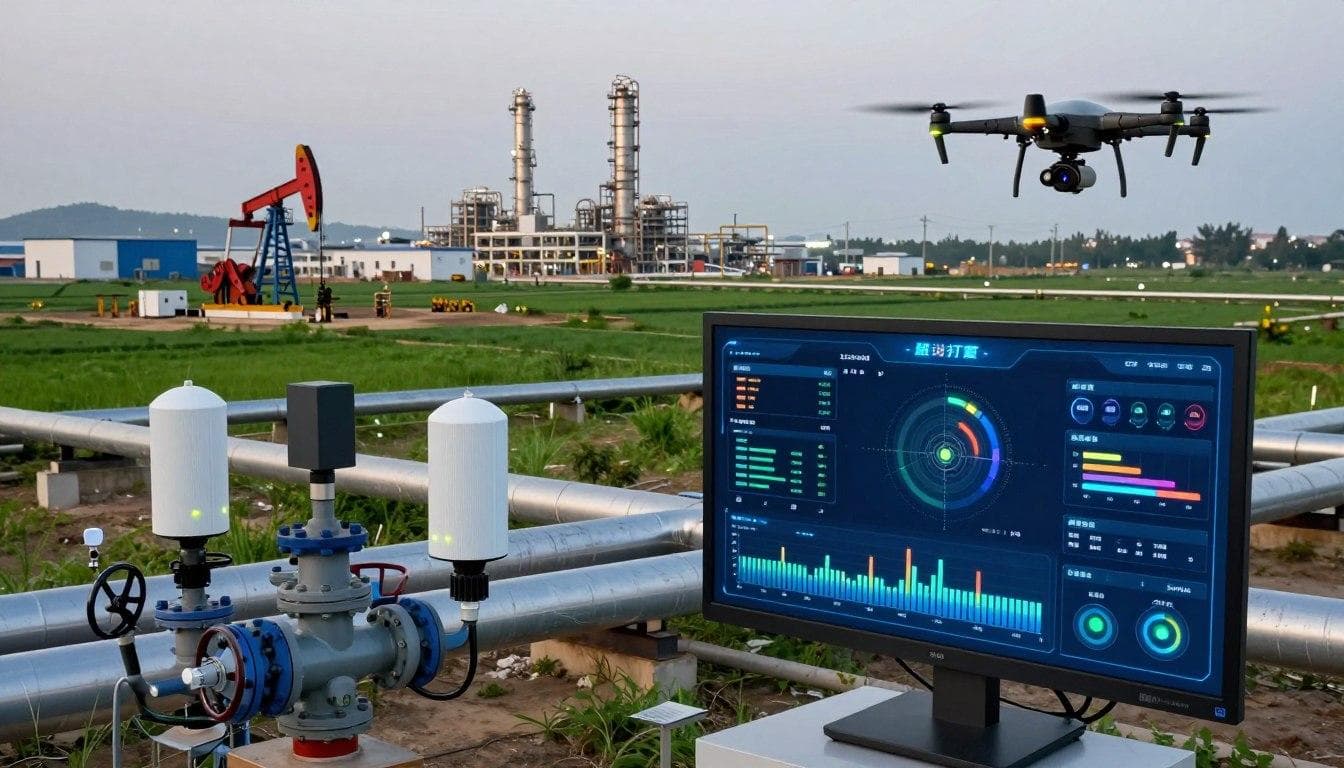 Field-to-Control-Room Visibility
A connected monitoring approach helps organize data from detection equipment and translate anomalies into information your operators can assess.
Field sensors, flow meters and surveys collect information on gas concentration, acoustic activity and flow behavior.
Relevant information is delivered to monitoring and SCADA systems through a suitable communications architecture.
Trends, alerts and multiple sensor inputs are assessed to help distinguish potential leaks from normal operating changes.
Operators review events, coordinate field verification and follow approved emergency and isolation procedures.
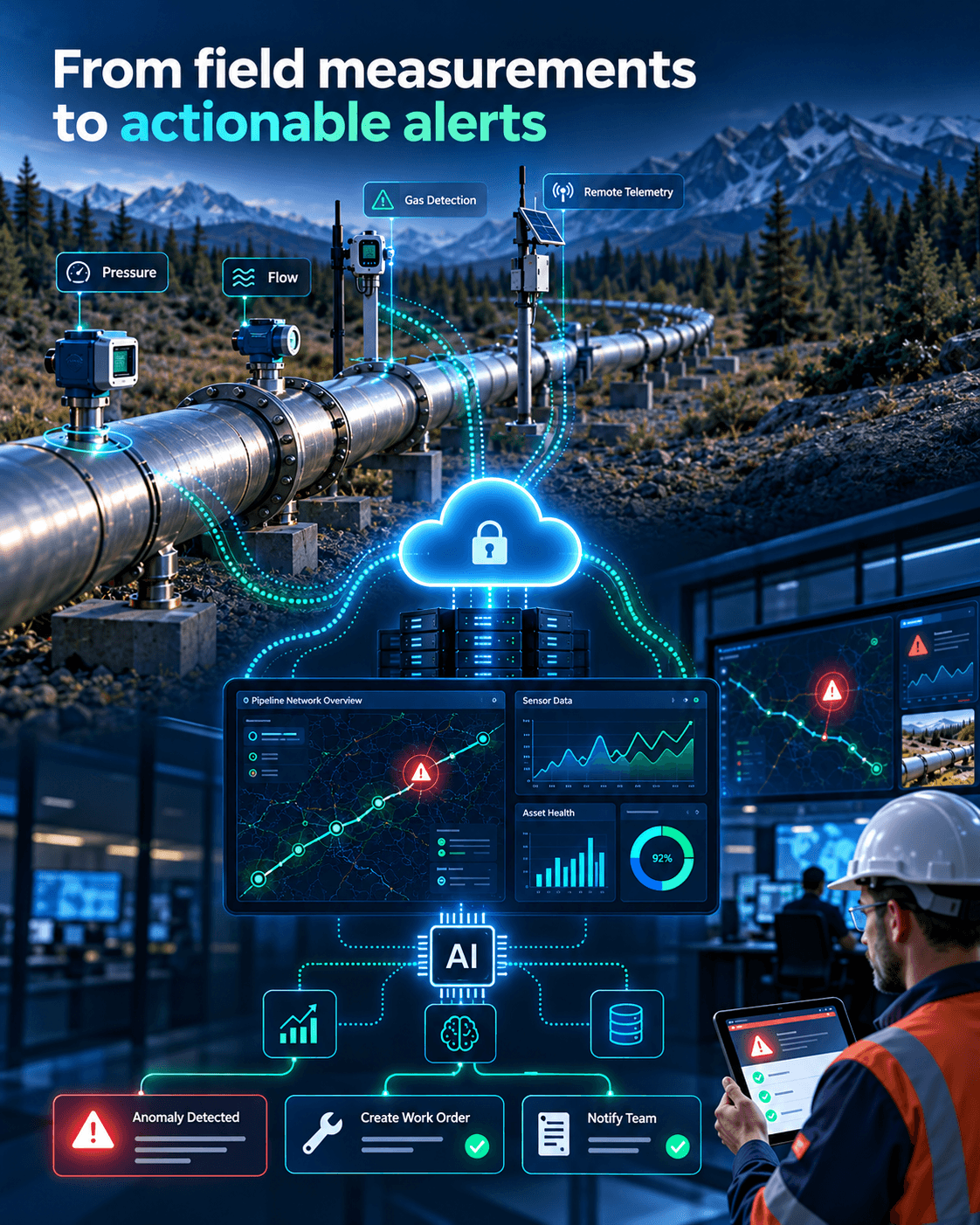
Concept illustration: Sensor and SCADA Monitoring Workflow
Detection strategies are selected according to pipeline conditions, coverage requirements, terrain and operational objectives.
High-frequency acoustic sensing helps identify the characteristic signatures of pressurized gas escaping from a pipeline.
Tunable diode laser absorption spectroscopy measures methane concentration along surveyed pipeline routes and critical assets.
Fiber-optic technology can detect vibration and temperature changes along installed cable routes to support anomaly detection.
Scheduled aerial surveys help inspect long or difficult-to-access stretches using suitable gas-sensing instruments.
Compare inlet and outlet flow information to flag unexpected imbalances for operator assessment and verification.
Give operators an additional source of information about possible gas releases.
Surface abnormal measurements sooner where continuous monitoring is implemented.
Help prioritize investigation of gas losses and potential methane emissions.
Engineer sensing, communications and control-system integration for the site.
Choose a monitoring strategy around the needs of your assets, operators and field teams.
Monitor gas distribution infrastructure, critical junctions and network sections serving urban and commercial areas.
Improve operational awareness around process lines, factories, industrial parks and gas-consuming installations.
Support targeted inspections and visibility across distant, exposed or difficult-to-access pipeline corridors.
Add layered detection and monitoring around stations, metering facilities and other operationally important locations.
A coordinated response moves from abnormal readings to validation, field checks and appropriate operational actions.
A sensor network or SCADA indicates a reading that needs further review.
An event is brought to the control-room team's attention for assessment.
Available information helps narrow the section to inspect.
Authorized staff check the suspected location using appropriate equipment.
The response team follows site-specific isolation and repair procedures.
Illustrative sequence only: the T+ times are example markers from the supplied page, not guaranteed detection, emergency response, localization or repair times. Actual procedures and timings must be established for each site.
Coverage, field conditions and existing instrumentation shape the final solution.
Yes, integration can be planned around available field instrumentation, control-system interfaces and communication protocols. Exact compatibility is confirmed during engineering review.
Not necessarily. Pipeline terrain, operating pressure, access and risk profile may call for a combination of acoustic, optical, flow-based and survey-based approaches.
Response depends on sensor coverage, thresholds, network availability, field access and operating procedures. The timeline above is an illustrative workflow, not a response-time commitment.
Remote sections can be assessed for practical communications, power, sensing and inspection options. The final design depends on site conditions and project requirements.
Discuss your existing pipeline infrastructure, monitoring requirements and available instrumentation with our engineering team.